
The Problem: Glass Lets In More Than Light
Pakistani homes and offices love large windows. Natural light makes spaces feel bigger, brighter, and more premium. But every square foot of glass is also a solar collector. In Islamabad's summer, sunlight streaming through untreated glass can raise a room's temperature dramatically, forcing air conditioners to work harder, longer, and at greater cost.
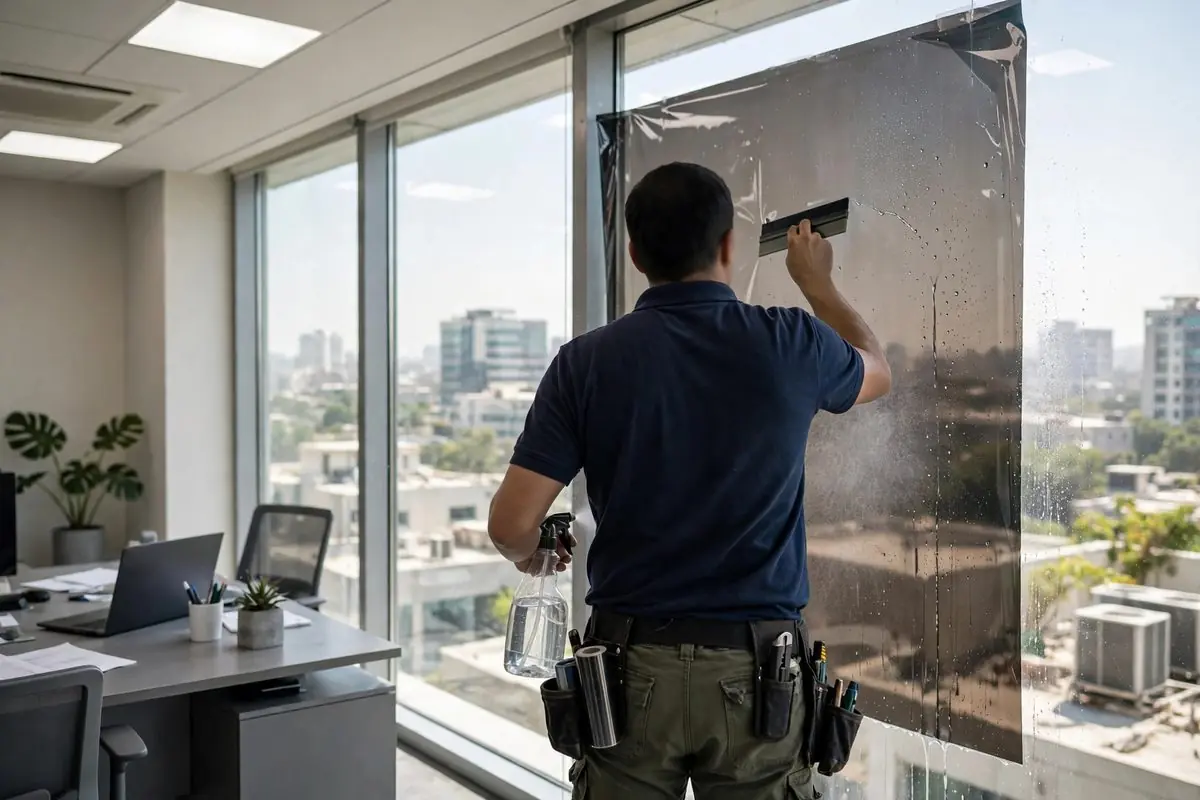
Many people assume the solution is smaller windows or heavy curtains. But curtains block the light along with the heat, defeating the purpose of the glass. Heat control window film offers a better answer: a thin laminated film applied to existing glass that selectively blocks solar heat and UV radiation while preserving natural light and views.
BPC Company supplies and installs architectural solar control films as part of our glass and film solutions in Islamabad and Swat. This guide explains how heat control films work, the types available, what they can realistically achieve, and what affects the cost.
How Solar Control Film Works
Window film is a multi-layer polyester laminate, typically 25 to 100 microns thick depending on type, applied to the interior surface of existing glass with a mounting adhesive and water solution. Once cured, it becomes effectively part of the glass.
The heat-blocking performance comes from the film's construction. Metallized films use microscopically thin metal layers that reflect solar energy away from the glass. Ceramic films use nano-ceramic particles that absorb and dissipate infrared heat without the reflective appearance. Dyed films primarily reduce glare and provide privacy with modest heat rejection.
The key performance metrics to understand:
Total Solar Energy Rejection (TSER). The percentage of total solar energy blocked. Higher is better for heat control. Quality solar films achieve significant rejection rates.
Visible Light Transmission (VLT). The percentage of visible light that passes through. A film can block substantial heat while still transmitting most visible light. This is the critical advantage over curtains or blinds: you keep the daylight and lose the heat.
UV rejection. Quality solar films block the vast majority of ultraviolet radiation, typically 99% or more. UV is what fades furniture, flooring, curtains, and artwork. If your sofa near the window is bleaching, UV is the culprit.
Glare reduction. Films reduce the harsh brightness that makes screens unreadable and rooms uncomfortable, without darkening the space excessively.
The right film balances these properties for your specific situation. A west-facing office in Islamabad needs aggressive heat rejection. A north-facing bedroom might prioritize UV protection with minimal tint.
Types of Heat Control Film
Metallized solar films. The workhorses of heat control. Thin metal layers provide strong solar energy rejection at a moderate price point. They have a slightly reflective appearance from outside, which many commercial clients actually prefer for the uniform look it gives a building facade. The trade-off is potential interference with mobile signals in some installations, though this is less of an issue with modern film constructions.
Ceramic films. Premium films using nano-ceramic technology. They achieve high heat rejection with a non-reflective, natural appearance that preserves the glass's original look. Ceramic films do not interfere with electronic signals. They cost more than metallized films but are the preferred choice where aesthetics matter, such as luxury residences and high-end offices.
Dyed films. Primarily for glare reduction and privacy with modest heat control. The most economical option, but also the least effective at blocking heat. Suitable where the main concern is privacy or mild glare rather than serious cooling load.
Spectrally selective films. Advanced films engineered to block infrared heat while transmitting maximum visible light. They appear nearly clear but perform like darker films thermally. The premium option for clients who want maximum heat control with zero change in glass appearance.
Safety and security films (with solar properties). Thicker films that combine solar control with shatter resistance, holding glass fragments together on impact. Relevant for ground-floor commercial premises and buildings in security-sensitive applications. Our glass film solutions cover the full range including dedicated security films.
What Heat Control Film Can Realistically Achieve
Honest expectations matter. Window film is highly effective, but it is not magic.
Cooling load reduction. By blocking a large portion of solar energy before it enters the room, film reduces the heat the air conditioner must remove. Rooms with large west or south-facing glass see the most dramatic improvement. Clients commonly report noticeably cooler rooms and reduced AC runtime, though exact savings depend on the building, orientation, existing glass, and usage patterns. We avoid promising specific percentage savings because too many variables are involved.
UV protection. This is the most clear-cut benefit. Quality films block 99%+ of UV, effectively stopping the fading of interiors. If you have expensive furniture, wooden flooring, or artwork near windows, UV protection alone justifies the investment.
Glare control. Screens become readable, harsh bright spots disappear, and rooms feel more comfortable without resorting to closing curtains during the day.
What film cannot do. Film cannot fix poor insulation in walls or roofs. It cannot compensate for an undersized air conditioner. And it works on the glass it is applied to: if your heat problem comes mainly through an uninsulated concrete roof, window film will help but not solve it. A good consultant identifies the actual heat sources before recommending film.
Ideal Applications in Pakistan
West-facing rooms. The afternoon sun is the harshest. Bedrooms, living rooms, and offices with western exposure benefit most dramatically.
Commercial buildings with glass facades. Offices, banks, and retail spaces with extensive glazing face enormous cooling loads. Film is far cheaper than replacing glass and can be installed without disrupting operations.
Showrooms. Car showrooms, furniture stores, and retail displays need natural light for presentation but suffer UV damage to displayed products. Film protects inventory while keeping the bright, open feel.
Schools and hospitals. Large windows for daylight, but vulnerable occupants who need thermal comfort. Film improves conditions without major construction.
Residential villas. Floor-to-ceiling windows and glass doors in modern Pakistani home designs create beautiful spaces that overheat without treatment.
What Affects the Cost of Window Film Installation
- Glass area. Total square footage of glass to be filmed. Larger projects benefit from economies of scale.
- Film type. Dyed vs metallized vs ceramic vs spectrally selective, in ascending price order, reflecting ascending performance.
- Glass condition and type. Film applies to existing glass, but the glass must be in sound condition. Very old, damaged, or certain specialty glasses may need assessment.
- Access and height. Ground floor windows are straightforward. High-rise facades or atrium glass need access equipment, which adds cost.
- Removal of old film. If existing degraded film needs stripping before new application, that is additional labor.
- Warranty level. Longer warranty films cost more. We recommend weighing warranty terms as part of the value comparison.
BPC quotes film installation based on a site survey measuring your actual glass area and assessing the glass condition, because these determine both the material quantity and the installation complexity.
Getting Heat Control Film from BPC
We start by understanding which rooms overheat and when. A site visit lets us assess glass orientation, area, and condition, then recommend the film type that balances heat rejection, light transmission, and appearance for your specific situation.
For Islamabad, Rawalpindi, and Jhelum, WhatsApp 03126175608. For Swat, Shangla, Dir, Buner, and Peshawar, WhatsApp 03339477778.
Our glass film solutions cover solar control, security films, decorative films, and privacy applications. If heat is entering through more than just windows, our waterproofing solutions address roof heat through reflective treatments.
FAQs
Does window film really reduce room temperature? Yes. By blocking a large portion of solar energy at the glass, film prevents that heat from entering the room in the first place. The effect is most noticeable in rooms with large sun-facing windows. It reduces the cooling load on your air conditioner rather than replacing air conditioning entirely.
Will film make my rooms dark? Not necessarily. Modern solar films are engineered to block heat (infrared) while transmitting visible light. Ceramic and spectrally selective films in particular maintain a bright interior. You choose the balance of heat rejection and light transmission during selection.
How long does window film last? Quality architectural films are manufactured for extended service life. Actual lifespan depends on the film type, installation quality, glass orientation, and exposure. We specify films with documented durability.
Can film be applied to existing windows? Yes. That is the main advantage. Film retrofits to your current glass without replacement. The glass needs to be in sound condition and properly cleaned before application.
Does film work on double-glazed windows? Generally yes, but the film type must be compatible with insulated glass units. Some highly absorptive films can cause thermal stress in double glazing. This is why professional specification matters rather than buying film off the shelf.
Will film damage my glass? Professionally installed quality film does not damage glass. Problems arise from incorrect film selection for the glass type or poor installation. Our installers assess glass compatibility before recommending a film.
Can I see out clearly through solar film? From inside, quality films maintain good visibility. From outside during daytime, metallized films have a reflective appearance that provides daytime privacy. At night with interior lights on, the privacy effect reverses, which is worth knowing.
Is window film a DIY job? Small residential windows are sometimes DIY-attempted, but professional installation matters for large areas, commercial projects, and warranty validity. Bubbles, creases, and edge lifting are the typical DIY outcomes. For the investment to perform as specified, professional application is strongly recommended.
You May Also Like

Still have questions?
Chat with our team on WhatsApp for a free site visit and written quotation. We reply within minutes during working hours.