
What French Molding Is and Why It Is Trending
Walk into a newly finished drawing room in DHA Islamabad or a boutique hotel lobby and you may notice something: the walls are not flat. Rectangular and square frames, thin raised moldings forming geometric patterns across the wall surface, painted in the same color as the wall or in subtle contrast. This is French molding, also called French wall panel molding or wainscoting-style panel molding, and it has become one of the most requested wall treatments in Pakistani interiors.
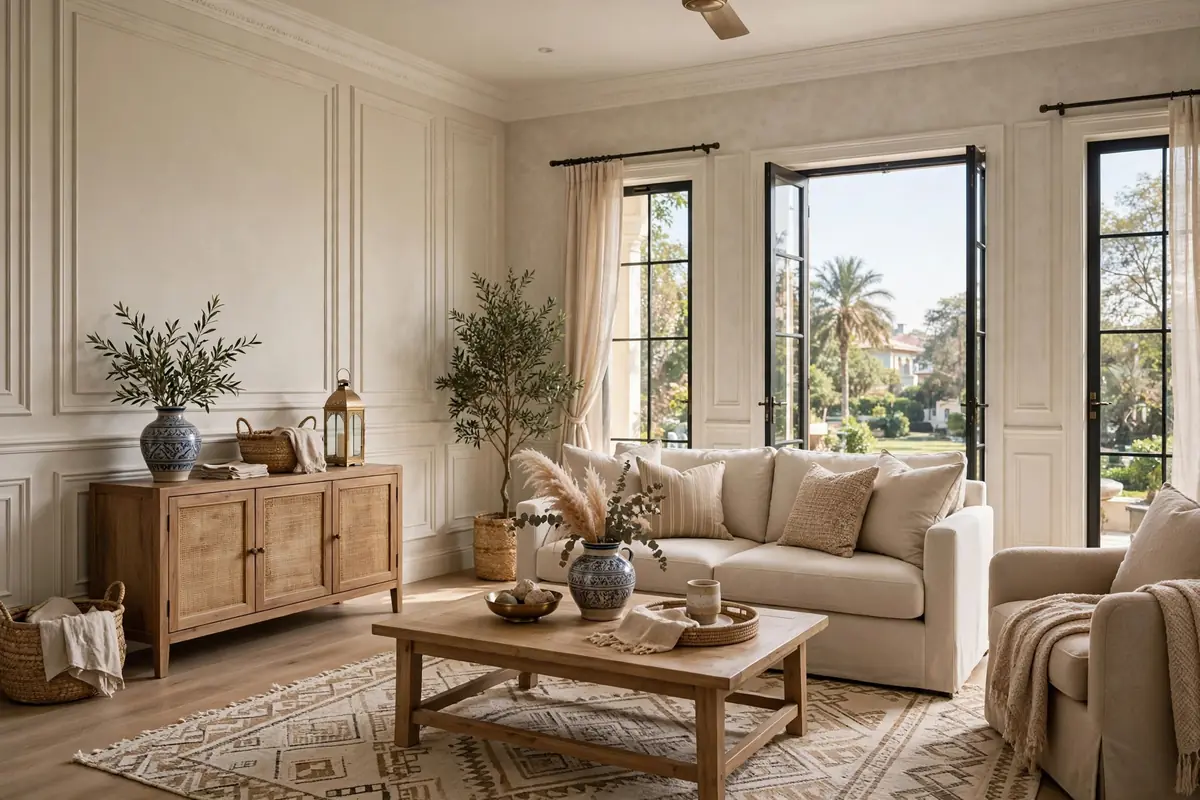
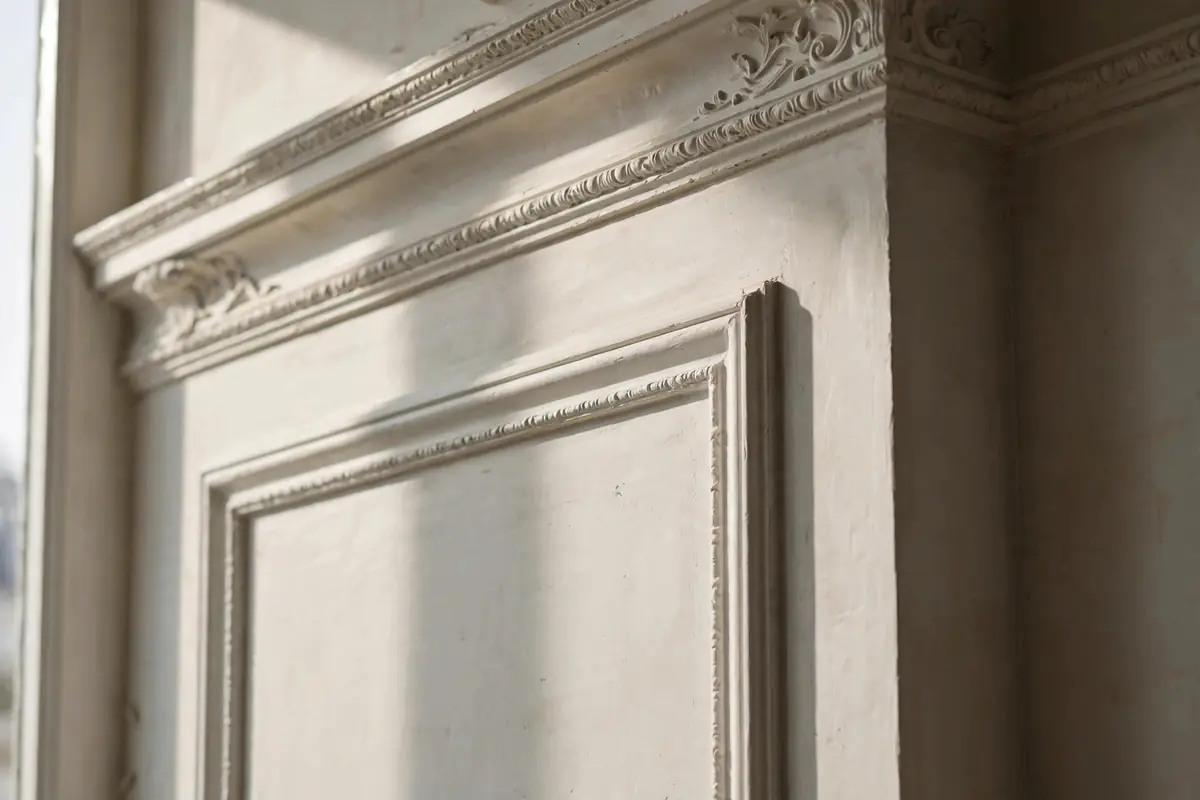
French molding creates architectural detail on plain walls using applied molding strips arranged in panel patterns. It adds depth, shadow lines, and a sense of craftsmanship that flat painted walls cannot achieve. The look ranges from classical formality to contemporary minimalism depending on the pattern geometry and color treatment.
BPC Company designs and installs French molding wall panel systems as part of our wall paneling services in Islamabad and Swat. This guide covers the design options, how molding sets are composed, and what determines the cost.
Design Patterns: The Vocabulary of French Molding
Single rectangle panels. The classic application. Large rectangular frames run along the wall, typically with chair-rail height lower panels and taller upper panels. This is the formal, timeless look seen in drawing rooms and dining rooms.
Double rectangle and nested panels. Two concentric rectangles create a more detailed, layered appearance. The inner panel is smaller, centered within the outer. This suits larger walls where single rectangles would look sparse.
Square panels. Geometric and contemporary. Square grids work well in bedrooms and modern living spaces, especially when kept uniform and minimal.
Full-height panels. Floor-to-ceiling molding frames for dramatic effect in double-height spaces, stairwells, and entrance lobbies. These make the strongest architectural statement.
Chair rail with lower paneling. A horizontal molding strip at chair-rail height divides the wall, with panel molding below and plain or differently treated wall above. This is practical as well as decorative: the lower section protects walls from chair damage in dining rooms.
Accent wall applications. French molding on a single feature wall, often behind the bed in a master bedroom or behind the sofa in a living room, with other walls kept simple. This delivers the design impact at a fraction of whole-room cost.
Ceiling coordination. Some projects extend molding to ceiling borders or coffers for a fully finished architectural envelope. This is typically a premium addition discussed during the design phase.
Materials Used for French Molding
PVC and polymer moldings. The most common choice for residential projects in Pakistan. Lightweight, moisture-resistant, easy to install, and available in consistent profiles. They take paint well and do not warp or crack with humidity changes.
WPC moldings. Wood-plastic composite moldings offer a slightly more substantial feel. They suit projects where the molding needs to coordinate with WPC wall panels, which BPC also supplies.
Plaster and POP moldings. Traditional gypsum-based moldings, still used where a hand-finished classical look is wanted. They require skilled craftsmen and are more vulnerable to moisture and impact damage than polymer options.
Wood moldings. Solid wood strips for premium traditional interiors. Beautiful but expensive, and subject to the same moisture and termite concerns as all wood in Pakistani conditions.
For most Pakistani homes, polymer moldings hit the sweet spot of appearance, durability, and cost. We recommend them for the majority of residential projects unless a specific design demands otherwise.
How Molding Sets Are Composed
A French molding project is not just strips on a wall. A proper set includes:
Panel moldings. The decorative strips forming the rectangular or square frames. Profile choice (the cross-section shape) determines whether the look is sharp and modern or soft and classical.
Chair rails. Horizontal strips at the transition height, with a profile designed to cap the lower panels cleanly.
Baseboards. The skirting at floor level, coordinated in profile with the panel moldings for a unified look.
Crown or cornice molding. Where wall meets ceiling, a cornice strip completes the architectural envelope. This is what makes the room feel fully finished rather than partially decorated.
Corner and joint pieces. Proper corners, where moldings meet at wall intersections, separate professional work from amateur. Pre-formed corner pieces or precisely mitered joints are essential.
When we quote a French molding project, we specify the complete set, not just the visible panel strips. The supporting moldings are what make the installation look intentional and complete.
Color Treatments
Monochromatic. Moldings painted the same color as the wall. This is the most sophisticated treatment: the pattern reads through shadow and light rather than color contrast. It suits modern interiors and lets the architecture speak quietly.
Subtle contrast. Moldings one or two shades lighter or darker than the wall. Adds definition while staying elegant. Popular in bedrooms where a gentle feature is wanted.
Bold contrast. White moldings on a colored wall, or dark moldings on a light wall. Dramatic and classical. Works best in formal spaces with the ceiling height to carry it.
Metallic accents. Gold or champagne detailing on molding edges for luxury projects. Used sparingly, typically in formal drawing rooms or hospitality settings.
The paint finish matters as much as the color. Matte and eggshell finishes suit contemporary looks. Semi-gloss highlights the molding profiles more dramatically.
What Determines French Molding Cost
- Wall area and linear footage. Total length of molding required is the primary driver. More panels and more walls mean more material and labor.
- Design complexity. Simple single rectangles cost less than nested double panels or full-height installations. Every additional molding line adds material and installation time.
- Molding material. Polymer vs WPC vs plaster vs wood, in roughly ascending price order.
- Complete set vs panels only. Including chair rails, baseboards, and cornice costs more than panel strips alone but delivers the finished look.
- Wall condition. Smooth, plumb walls install quickly. Damaged or uneven walls need preparation before molding application.
- Paint and finishing. Number of coats, finish type, and whether walls also need repainting as part of the project.
- Room count. Whole-house molding packages are more economical per room than single-room projects because design, mobilization, and finishing are shared.
BPC quotes French molding after seeing the rooms, because wall conditions, ceiling heights, and design choices all affect the real scope.
Getting French Molding from BPC
We start with your rooms and your taste. Our team proposes panel layouts suited to your wall dimensions and ceiling heights, shows material and profile options, and provides a written quotation covering moldings, installation, and finishing.
For Islamabad, Rawalpindi, and Jhelum, WhatsApp 03126175608. For Swat, Shangla, Dir, Buner, and Peshawar, WhatsApp 03327723737.
French molding pairs naturally with our wallpapers and wall paneling services. Many clients combine a molding feature wall with wallpapered or paneled adjacent walls for a layered, designer interior.
FAQs
What is French wall molding made of? Most commonly polymer (PVC) or WPC moldings in Pakistan, chosen for moisture resistance and consistent profiles. Traditional options include plaster and solid wood for specific design requirements.
Is French molding suitable for Pakistani homes? Yes, very much so. Polymer moldings handle Pakistan's humidity and temperature variations well. The style suits both the classical tastes common in formal drawing rooms and the clean geometry of contemporary interiors.
How long does installation take? A single feature wall can typically be completed in a day or two including finishing. Whole-room or whole-house projects take longer depending on scope.
Can French molding be installed on existing painted walls? Yes, provided the walls are sound and reasonably smooth. The moldings adhere to the prepared wall surface and are then caulked and painted for a seamless finish. Damaged walls need repair first.
Does French molding work in small rooms? Yes, with appropriate scaling. Smaller panels and simpler patterns suit compact bedrooms. The key is proportioning the panel sizes to the wall dimensions, which our designers handle during layout.
How do I clean and maintain molding? Dust with a soft cloth or brush. Painted polymer moldings can be wiped with a damp cloth. Repainting follows the same schedule as your walls. No special maintenance is needed.
Can I combine French molding with wallpaper? Absolutely, and it is one of the most effective combinations. Common approaches include molding frames with wallpaper inset panels, or a molding feature wall paired with wallpapered adjacent walls. We design these combinations regularly.
What is the difference between French molding and WPC wall panels? French molding is applied trim forming patterns on the existing wall surface. WPC wall panels are full-coverage panels (such as fluted panels) that clad the entire wall. They are different treatments that can be used separately or combined. Our wall paneling options cover the full range.
You May Also Like


Still have questions?
Chat with our team on WhatsApp for a free site visit and written quotation. We reply within minutes during working hours.