
Why Turkish Profiles Dominate the Conversation
Ask about uPVC windows in Pakistan and Turkish profiles come up within minutes. Turkish uPVC windows have built a strong reputation in the Pakistani market over the years, driven by established manufacturing standards, profiles engineered for varied climates, and consistent availability through importers and fabricators.
But “Turkish” describes origin, not a single quality level. Within Turkish brands there are different series and grades, and between suppliers there are wide differences in fabrication and installation. This guide explains the profile grades you will encounter, the quality differences that genuinely matter, and the questions that separate professional suppliers from risky ones. BPC Company supplies and installs Yagmurpen Turkish uPVC systems from our Islamabad and Swat branches.
Understanding Profile Grades and Series
Every established profile brand offers multiple series. Typically, a standard residential series covers everyday windows and doors with a common profile width, often around 60mm. Heavier series with wider profiles and more chambers serve larger openings, high-wind locations, and premium projects.
The grade differences show up in wall thickness, chamber count, reinforcement channel design, and finish options. A supplier quoting “Turkish uPVC” without naming the series is quoting a category, not a product. Two quotes at different prices may simply reflect different series, and without the series name you cannot tell whether you are comparing fairly or being upsold unnecessarily.
Always ask: which brand, which series, and what are that series’ key specifications. Get it in writing.
The Quality Differences That Actually Matter
Across all Turkish profile grades, these are the attributes that separate good from mediocre:
Wall thickness and chamber design. Thicker profile walls and well-designed multi-chamber sections provide rigidity and insulation. These are measurable specifications, not marketing claims. Ask for them.
Steel reinforcement. Galvanized steel inside the profile chambers gives the frame its structural strength. Confirm it is included in all sash and frame sections, not just the main frame. Its gauge and coverage should be specified.
Gasket system. Quality EPDM gaskets that compress evenly when the window closes are essential for air, dust, water, and noise sealing. Combined with multi-point locking, they are what make a window feel solid and perform well.
Hardware compatibility. The profile system should be designed for proper branded hardware: handles, hinges, and locking mechanisms that fit precisely. Hardware is a frequent corner-cutting area, so it must be named in the quotation.
Formulation and UV resistance. Pakistan’s intense sun tests every exterior material. Established Turkish manufacturers formulate profiles with UV stabilizers for long-term color and surface stability.
Fabrication precision. Corner welding quality, reinforcement insertion, gasket fitting, and glazing all happen at the fabricator. A premium profile fabricated poorly is a poor window. Visit the showroom, inspect a finished sample, and ask who fabricates and who installs.
Red Flags When Shopping for Turkish uPVC
Watch for these warning signs regardless of which Turkish brand a supplier quotes:
The brand is named but the series is not. Without the series, the quote is incomplete.
Hardware, glass, and reinforcement are described vaguely. “Good quality” and “imported” are not specifications.
The price is dramatically lower than every other quote. Genuine Turkish profiles have real material costs. Extreme undercutting usually means a lower series quoted as a higher one, missing reinforcement, cheap hardware, or installation treated as an afterthought.
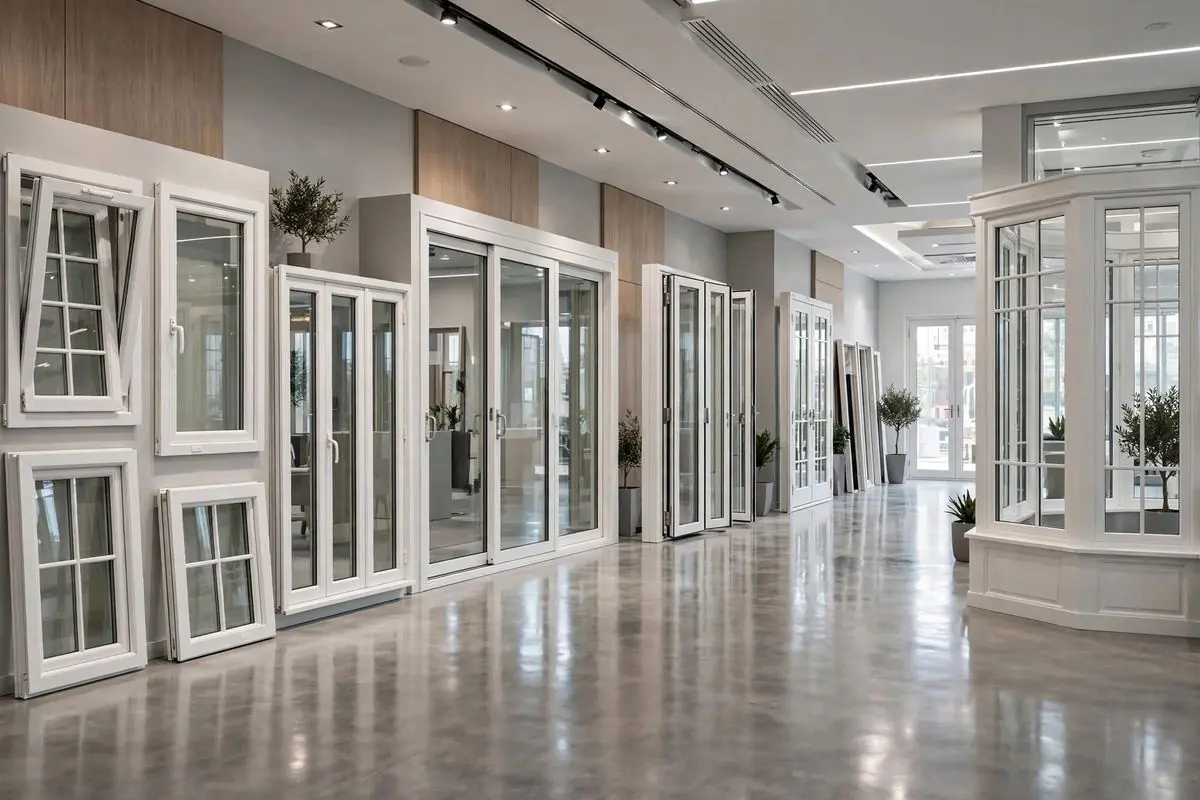
There is no physical showroom or finished sample to inspect. Established suppliers invest in display space. Be cautious of suppliers operating only from a phone number.
Installation is vague or subcontracted to unknown teams. Ask directly who installs your windows and what the installation includes.
No written itemized quotation. Verbal figures and lump sums without breakdowns cannot be compared or held to account.
What to Ask Every Supplier
- Which Turkish brand and which specific series are you quoting?
- What is the profile wall thickness, width, and chamber design?
- Is galvanized steel reinforcement included in all sections?
- What gasket system and hardware brand are specified?
- What glass options are available: single, double glazed, laminated?
- Who fabricates the windows and who installs them?
- Does the quote include site measurement, installation, and perimeter sealing?
- What after-sales support do you provide?
Suppliers who answer with specifics and put them in writing earn your trust. Those who stay vague do not.
Matching the Grade to Your Project
Not every project needs the heaviest series. A standard Turkish series with proper reinforcement, quality hardware, and professional installation serves most residential projects well. Larger openings, exposed locations, and commercial projects may justify stepping up a grade.
The professional approach is room-by-room and opening-by-opening specification: the right grade where it matters, standard grade where it suffices. During our free site visit, we assess your openings, exposure, and needs, then recommend a specification that fits, without pushing the premium option everywhere.
For Islamabad, Rawalpindi, and Jhelum, WhatsApp us at 03126175608. For Swat, Shangla, Dir, Buner, and Peshawar, reach us at 03339477778.
To compare Turkish systems against each other, read Yagmurpen vs Wintech. For the full cost picture, see our uPVC windows price guide and uPVC windows and doors.
FAQs
Are Turkish uPVC windows better than other options? Turkish profiles have a strong track record in Pakistan for manufacturing consistency and climate suitability. Chinese systems like Zhongcai can offer good value at lower prices. The best choice depends on your budget, the specific series compared, and the supplier’s fabrication and installation standards.
What is the difference between profile series? Series differ in profile width, wall thickness, chamber design, reinforcement channels, and finish options. Heavier series suit larger openings and demanding locations. The series name should always appear in your quotation.
How do I verify I am getting a genuine Turkish profile? Buy from an established supplier with a physical showroom. Insist on the brand and series in writing. Ask to see profile cross-sections and finished sample windows. Genuine suppliers welcome this scrutiny.
Is a 60mm profile sufficient for a house? For most residential windows, a standard 60mm system with proper steel reinforcement, quality hardware, and professional installation performs well. Larger openings or high-wind exposures may warrant a heavier section. Your supplier should advise opening by opening.
Do Turkish profiles come in colors other than white? Many series offer wood-grain foils and colored finishes beyond standard white. Availability varies by brand and series, so confirm the specific finish you want is available in the quoted series before committing.
What affects the price most within Turkish systems? The series grade, glass choice (single vs double glazed vs laminated), hardware brand, and installation quality. Two “Turkish uPVC” quotes can differ substantially once these are specified, which is why itemized quotations matter.
Can Turkish uPVC handle Swat winters and Islamabad summers? Properly formulated uPVC handles Pakistan’s temperature range well. Multi-chamber profiles with quality gaskets provide insulation in both cold and heat. This climate versatility is part of why Turkish profiles earned their reputation here.
Do you supply Turkish uPVC in both your regions? Yes. BPC supplies and installs Yagmurpen Turkish uPVC systems across Islamabad, Rawalpindi, and Jhelum, and across Swat, Shangla, Dir, Buner, and Peshawar.
You May Also Like

Still have questions?
Chat with our team on WhatsApp for a free site visit and written quotation. We reply within minutes during working hours.