
Two Different Answers to the Same Problem
When property owners in Pakistan look for a car parking shade, they usually encounter two options: fiber shades made from rigid FRP (fiber-reinforced plastic) sheets, and tensile shades made from flexible fabric membranes stretched over steel frames. Both keep sun and rain off vehicles. They differ significantly in appearance, engineering, durability, and cost structure.
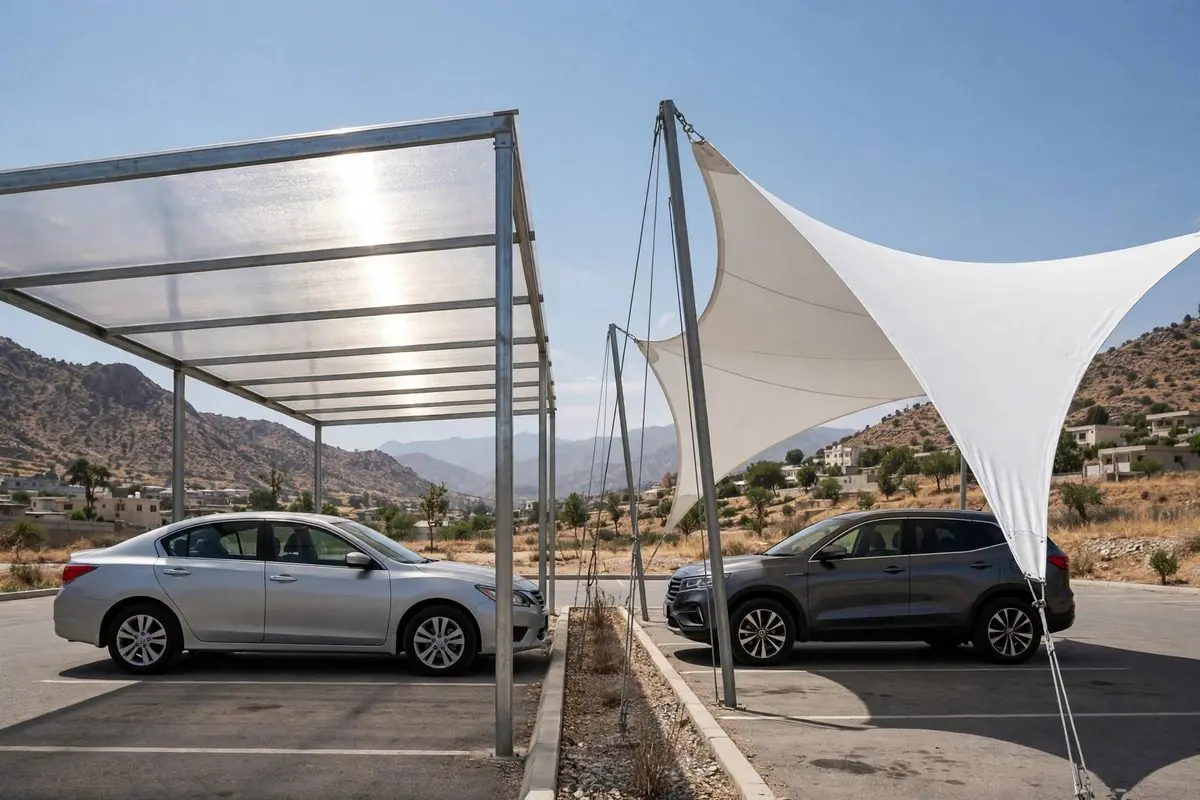
Choosing between them is not about which is universally better. It is about which suits your site, your usage, and your budget. This guide compares fiber shade vs tensile shade honestly across every factor that matters, so you can decide with confidence. BPC Company designs, fabricates, and installs tensile fabric shade structures from our Islamabad and Swat branches.
What Each Option Actually Is
A fiber shade uses rigid translucent or opaque FRP sheets mounted on a steel frame, usually in a flat or slightly curved arrangement. The sheets are lightweight, let diffused light through in translucent versions, and are a familiar sight over parking areas across Pakistan.
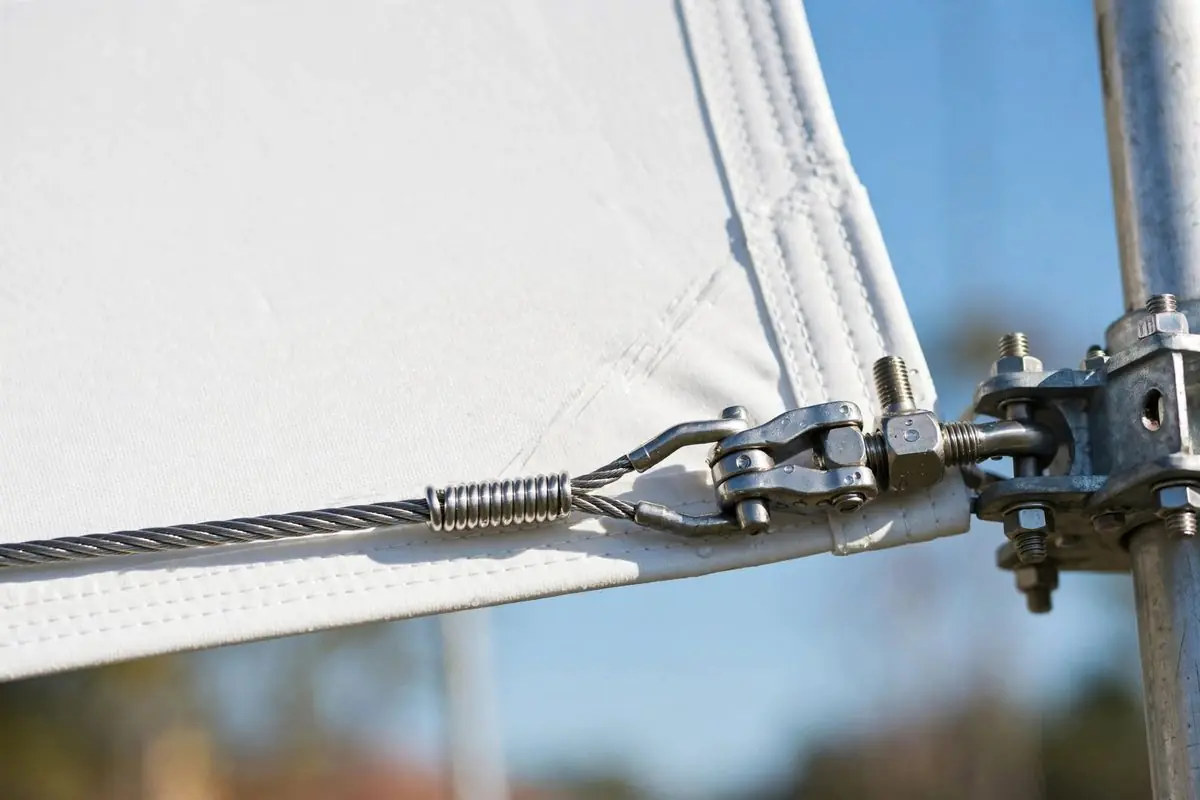
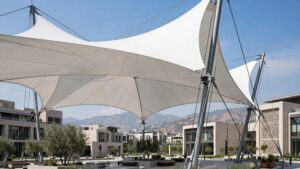
A tensile shade uses a flexible fabric membrane, tensioned across a steel structure into sculpted forms: cones, hypar curves, or cantilevered sails. The fabric is engineered for UV resistance, water shedding, and wind loads. The result is a shade that is also an architectural feature.
Appearance and Architectural Impact
This is the most visible difference. Fiber shades are functional and straightforward. They do their job without drawing attention, which suits utilitarian settings like workshops, rental parking, and back-of-house areas.
Tensile shades are sculptural. Their curved forms and clean lines elevate the look of villas, plazas, schools, mosques, restaurants, and commercial buildings. For properties where appearance matters, for front parking areas, entrances, and customer-facing spaces, tensile structures add visible value beyond shade. If your parking area is part of your property’s first impression, this difference alone often decides the choice.
Durability and Weather Performance
Fiber sheets are rigid and can become brittle over years of UV exposure, depending on sheet quality. Lower-grade sheets yellow, crack, or break under impact. Hail and heavy wind-borne debris can damage them. Replacement means swapping individual sheets, which is straightforward but recurs over the structure’s life.
Tensile fabrics are engineered membranes designed to flex rather than break. Quality fabrics resist UV degradation, shed water through their curved forms, and handle wind loads through engineered tensioning. They do need periodic inspection and occasional re-tensioning over the years, which your installer should explain upfront.
Both options depend heavily on the steel frame underneath. Galvanized steel with proper foundations is non-negotiable for either type in Pakistan’s wind and monsoon conditions. A shade is only as reliable as its structure.
Span and Design Flexibility
Fiber shades work best in straightforward rectangular layouts with regular column spacing. Complex shapes and large clear spans are difficult with rigid sheets.
Tensile structures excel at design flexibility. Conical, hypar, and cantilevered forms can cover irregular areas, create large column-free spans, and follow the architecture of the site. For awkward plots, multiple vehicles, or spaces where columns would obstruct movement, tensile design offers solutions fiber sheets cannot match.
Maintenance Over the Years
Fiber shades need periodic sheet inspection. Damaged or yellowed sheets are replaced individually. Frames need repainting or touch-ups where galvanizing wears. Gutters and drainage, if fitted, need clearing.
Tensile shades need membrane inspection, tension checks, and cleaning. Quality fabrics clean well and maintain appearance. Re-tensioning is a skilled task your installer should offer as part of after-sales support. Neither option is maintenance-free, and any supplier claiming otherwise is oversimplifying.
Cost Factors Compared
Neither option has a single fixed price. For fiber shades, cost factors include sheet quality and thickness, steel frame specification, total covered area, and foundation work. For tensile shades, cost factors include fabric type and grade, structural steel design complexity, covered area and form complexity, and foundation engineering.
As a general pattern, simple fiber shades cost less upfront than tensile structures of the same area, because the materials and fabrication are simpler. Tensile structures cost more but deliver architectural value, larger spans, and engineered weather performance. The honest comparison is lifetime value against your specific needs, not just day-one price. Extremely cheap quotes for either type usually signal thinner steel, weaker foundations, or lower-grade covering material.
Which Suits Your Site
Choose fiber shade when the priority is straightforward, economical coverage: workshop parking, staff parking at the back of a commercial plot, rental properties, or temporary needs. It is practical, familiar, and serviceable.
Choose tensile shade when appearance matters, when the site needs large clear spans or sculptural forms, when the parking area faces customers or the street, or when you want a structure that adds to the property’s value. Villas, plazas, schools, mosques, restaurants, and corporate offices typically benefit most from tensile solutions.
Some properties use both: tensile structures for the visible front parking and fiber shades for utilitarian rear areas. A good supplier will walk your site and recommend honestly rather than pushing one system everywhere.
What to Ask Before You Commit
- What is the exact covering material specification: sheet type and thickness, or fabric brand and grade?
- What steel specification is used for the frame, and is it galvanized?
- What foundations are included, and are they engineered for wind loads?
- How is rainwater handled: does the design shed water clear of vehicles and walkways?
- What maintenance will the structure need, and do you provide it?
- Is the quotation itemized: structure, covering, foundations, and installation separately?
- What after-sales support is included?
Getting the Right Shade from BPC
BPC specializes in tensile fabric shade structures, designed for your specific site and fabricated to handle real weather. We start with a free site visit: measuring the area, understanding vehicle movement, checking ground conditions, and discussing whether tensile is genuinely the right answer for your needs.
For Islamabad, Rawalpindi, and Jhelum, WhatsApp us at 03126175608. For Swat, Shangla, Dir, Buner, and Peshawar, reach us at 03339477778.
Explore our tensile fabric shade structures for the full range of forms and applications.
FAQs
What is the main difference between fiber and tensile shades? Fiber shades use rigid FRP sheets on a steel frame. Tensile shades use flexible engineered fabric tensioned into sculpted forms over steel structures. Fiber is simpler and more economical; tensile offers better appearance, larger spans, and engineered weather performance.
Which lasts longer? Both last well when built with quality materials and proper steelwork. Fiber sheets may need individual replacement as they age and yellow. Tensile membranes need periodic inspection and re-tensioning. Lifespan depends more on material grade and installation quality than on the type itself.
Which handles heavy rain better? Both shed rain when designed properly. Tensile forms are shaped to shed water actively, while fiber shades rely on slope and drainage. The critical factor for either is correct design and installation, not the covering type alone.
Can tensile shades cover a large parking area without many columns? Yes. This is one of tensile’s main advantages. Engineered forms like hypar and cantilever designs create large clear spans with minimal columns, keeping vehicle movement unobstructed.
Are tensile shades much more expensive? They typically cost more upfront than basic fiber shades of the same area, reflecting engineered fabric, structural design, and fabrication complexity. Compare lifetime value and the architectural benefit, not just initial price.
Do you install shades in both Islamabad and Swat? Yes. BPC designs and installs tensile shade structures across Islamabad, Rawalpindi, and Jhelum, and across Swat, Shangla, Dir, Buner, and Peshawar.
What maintenance does a tensile shade need? Periodic membrane inspection, tension checks, and cleaning. Your installer should explain the maintenance schedule and offer it as an after-sales service. Ask about this before committing.
Can I combine both types on one property? Yes. Many properties use tensile structures for visible front areas and fiber shades for utilitarian rear parking. We assess your site and recommend the honest mix.
You May Also Like
Still have questions?
Chat with our team on WhatsApp for a free site visit and written quotation. We reply within minutes during working hours.