
A Third Option Beyond Wallpaper and Paint
Most wall-finish conversations cover paint and wallpaper. But WPC and fluted wall panels have become a serious third option in Pakistani interiors, and for certain walls they are the best choice of all. Panels bring texture, depth, and durability that flat finishes cannot match, and they solve specific problems, like seepage-damaged walls, where paint and wallpaper both fail.
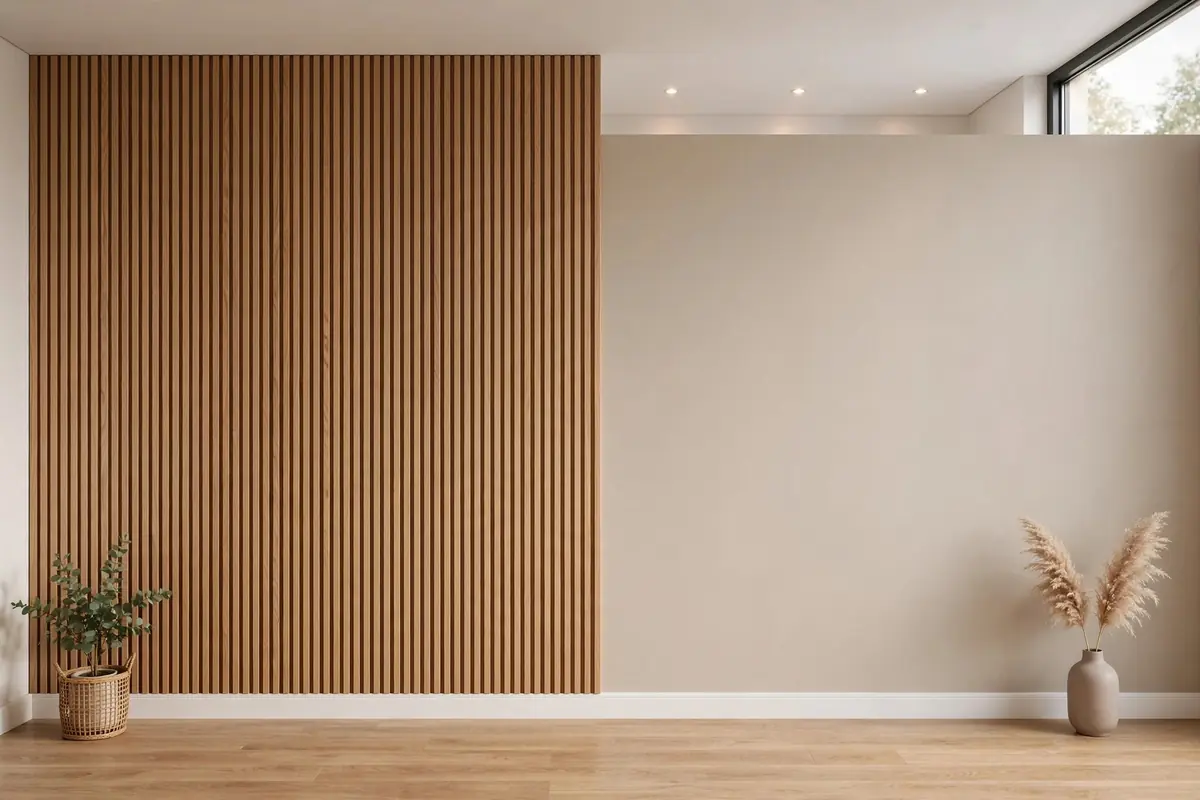
This guide compares wall panels vs paint in Pakistan across cost, durability, appearance, and practicality. BPC Company supplies and installs WPC panels, fluted panels, and related wall finishes from our Islamabad and Swat branches, alongside complete interior projects. As always, our aim is the right recommendation for your wall, not one finish for every situation.
What WPC and Fluted Wall Panels Are
WPC (wood-plastic composite) wall panels combine wood fibers with plastic polymers into rigid panels that look like wood but resist moisture, termites, and warping. They come in plank styles, sheet formats, and various wood-grain finishes.
Fluted panels are characterized by their ribbed, grooved surface: vertical channels that create rhythm, shadow, and texture on the wall. They are available in WPC, PVC, and other materials, in wood tones and contemporary colors. Fluted panels are currently one of the most requested finishes for TV walls, office receptions, and restaurant interiors.
Both install over the existing wall surface on framing or adhesive systems, which gives them a unique advantage discussed below.
Cost Factors Compared
Paint remains the lower-cost option upfront. Materials and labor for a quality paint job cost less per square foot than panel material plus installation.
Wall panels cost more initially. Panel material is priced per square foot or per piece, and installation is skilled work involving framing, cutting, and precise fitting. Feature walls with premium fluted panels in wood finishes sit at the upper end.
The value calculation changes with wall condition. On a seepage-damaged wall, paint fails repeatedly: each monsoon brings new bubbling and peeling, and each repaint costs money. Panels installed over a properly treated wall end the cycle. For problem walls, panels are often cheaper over a few years than repeated painting. For sound, dry walls, paint’s economy is hard to beat.
Durability: Where Panels Win Clearly
This is the decisive category for many buyers. WPC panels resist moisture, do not support mold growth the way organic materials do, shrug off scuffs and impacts that would mark paint, and keep their appearance for years with minimal maintenance. A quick wipe keeps them clean.
Paint’s durability is respectable on good walls but limited. It scuffs, it marks, touch-ups show, and on any wall with moisture history it fails predictably. In commercial spaces, restaurants, and high-traffic residential areas, panels dramatically outlast paint.
The seepage question deserves emphasis. Panels do not fix seepage; the leak must still be treated with proper waterproofing solutions. But once treated, panels provide a finish that tolerates residual wall imperfections and minor moisture far better than paint or wallpaper. For walls with a damp history, this tolerance is often the deciding factor.
Appearance and Design Impact
Fluted panels create architectural texture that flat paint cannot replicate. The vertical grooves catch light and shadow, adding depth that makes even simple rooms feel designed. Wood-grain WPC panels bring warmth that suits Pakistani residential tastes.
Paint’s aesthetic strength is color: unlimited shades, clean minimal surfaces, and easy changes. For minimalist interiors and large neutral spaces, paint is the right visual choice.
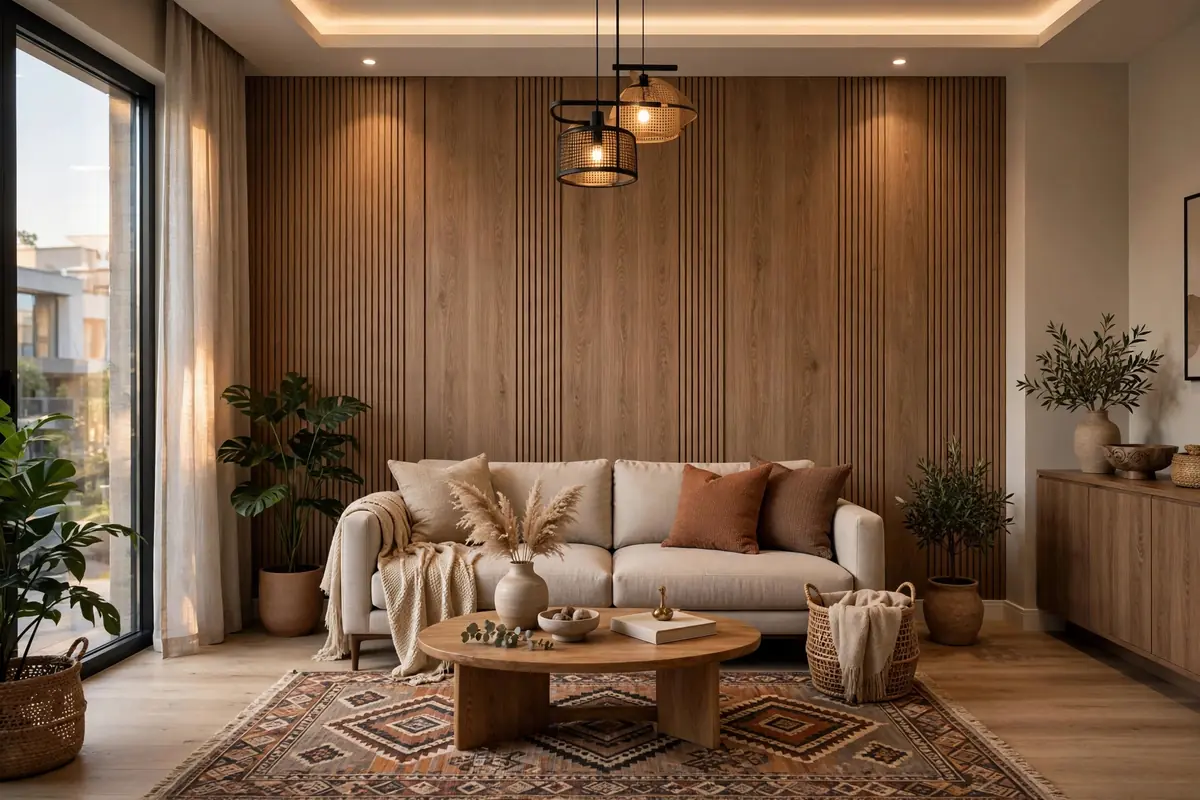
The strongest interiors often combine both: panelled feature walls with paint elsewhere, exactly the pattern that works with wallpaper. A fluted panel TV wall with coordinated paint on surrounding walls is one of the most effective living-room upgrades available.
Installation and Disruption
Painting is faster and simpler. Panels take longer: the wall is measured, framing or battens may be fixed, panels are cut and fitted precisely, and trims finish the edges. It is joinery-like work and should be priced as skilled installation.
Panels have one practical advantage during installation: they cover imperfect walls. Where paint demands smooth, prepared surfaces, panels can go over walls with minor unevenness, old texture, or repaired seepage damage, once the underlying issue is treated. This can actually reduce preparation work on problem walls.
Maintenance Compared
Panels need little: occasional wiping with a damp cloth. They do not need recoating, they do not show touch-up patches, and their color is integral to the material rather than a surface coating.
Paint needs periodic attention: touch-ups in high-traffic zones, and full recoats every few years depending on the room and paint quality. Over a decade, the maintenance effort for paint exceeds that for panels noticeably.
Room-by-Room Guidance
TV and media walls: fluted panels are the standout choice, adding texture behind the screen that paint cannot match.
Living and drawing rooms: panelled feature walls with paint elsewhere give premium impact at controlled cost.
Bedrooms: WPC panels behind the bed create warmth. Paint suits the remaining walls.
Seepage-affected walls: after waterproofing treatment, panels are the most forgiving and durable finish. Paint and wallpaper both struggle here.
Restaurants, salons, and offices: panels handle commercial wear and create the textured, photographable interiors businesses want.
Rental properties: paint remains the practical choice for turnover and cost.
Kitchens and bathrooms: moisture-resistant panels can work in selected areas, but discuss placement carefully with your supplier. Tiles remain the standard for wet zones.
What to Ask Before You Choose
- What is my wall’s condition, and does it have any moisture history?
- Which panel material is quoted: WPC, PVC, or other? What thickness?
- How are panels fixed: framing system or direct adhesive? What does each mean for my wall?
- Does the quote include trims, edge finishing, and cutting around switches and fixtures?
- For paint: which paint type and how many coats are specified?
- If there is seepage, what waterproofing treatment is recommended before finishing?
Getting the Right Finish from BPC
The choice between panels and paint depends on your walls, your rooms, and your priorities. BPC offers free site visits where we assess wall condition, discuss your goals, and recommend honestly, including telling you when paint is the smarter choice.
For Islamabad, Rawalpindi, and Jhelum, WhatsApp us at 03126175608. For Swat, Shangla, Dir, Buner, and Peshawar, reach us at 033394777778.
Explore our wallpapers and wall paneling for the complete finish range, read wallpaper vs paint for the other comparison, and see our custom interior solutions for full room projects.
FAQs
Are wall panels better than paint? For durability, texture, and problem walls, yes. For economy, simplicity, and minimalist looks, paint wins. The best choice depends on the specific wall and room.
What are WPC wall panels? Wood-plastic composite panels that look like wood but resist moisture, termites, and warping. They come in plank and sheet formats with various wood-grain finishes.
What are fluted panels? Panels with a ribbed, grooved surface that creates vertical texture and shadow lines. Available in WPC, PVC, and other materials, popular for TV walls and commercial interiors.
Can panels fix a seepage-damaged wall? Panels do not fix the leak itself; waterproofing treatment must come first. But once treated, panels are the most forgiving finish for walls with a damp history, far outperforming paint and wallpaper there.
Do panels work in humid rooms? WPC panels resist moisture well, making them suitable for areas where paint struggles. Discuss specific placement with your supplier, as wet zones like shower areas still call for tiles.
How are wall panels installed? Typically over the existing wall on a framing/batten system or with adhesive, with panels cut precisely and finished with trims. It is skilled work that takes longer than painting but covers imperfect walls effectively.
How do I maintain wall panels? Wipe with a damp cloth as needed. No recoating, no touch-up patches. Panels keep their appearance with minimal effort compared to paint.
Do you install wall panels in both Islamabad and Swat? Yes. BPC supplies and installs WPC and fluted wall panels across Islamabad, Rawalpindi, and Jhelum, and across Swat, Shangla, Dir, Buner, and Peshawar.
You May Also Like


Still have questions?
Chat with our team on WhatsApp for a free site visit and written quotation. We reply within minutes during working hours.