
Why “Interior Design Cost” Has No Single Answer
Search for interior design cost in Pakistan and you will find figures that seem to describe completely different services. That is because “interior design” covers a wide spectrum: a designer who provides drawings and material palettes, a company that designs and executes the full fit-out, a single-room makeover, and a complete villa interior. Each of these is priced differently.
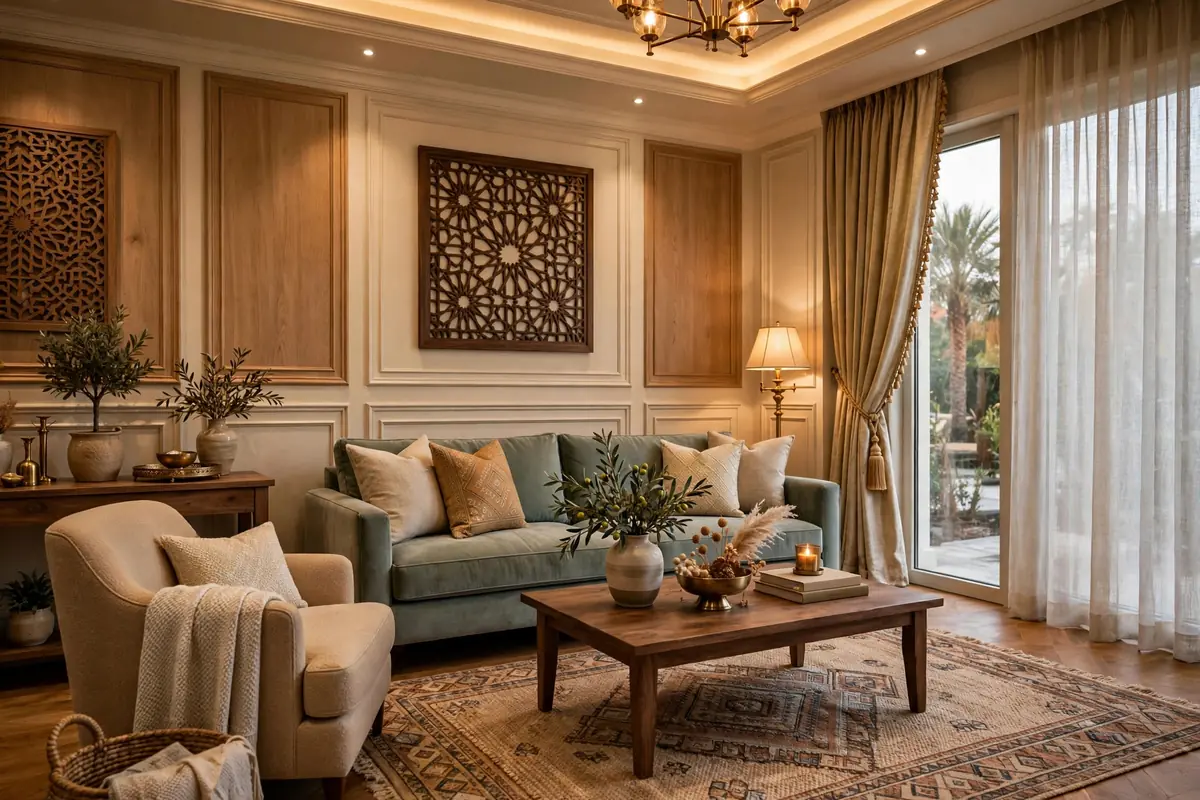
The honest starting point is to separate design service from execution. Some clients need professional design drawings they will execute themselves or through their own contractor. Others want one company to handle everything from concept to handover. BPC Company works primarily as a design-and-execute interior company from our Islamabad and Swat branches, delivering custom kitchens, wardrobes, media walls, wall finishes, ceilings, and complete room interiors.
This guide explains what actually drives interior design cost in Pakistan, so you can scope your project realistically and evaluate proposals with confidence.
The 7 Factors That Decide Interior Project Cost
1. Project Scope
Scope is the dominant cost factor. A single bedroom makeover, a full apartment interior, a complete villa, and a corporate office are fundamentally different projects. More rooms mean more design work, more materials, more trades on site, and longer timelines.
Be specific about your scope from the first conversation. “Full home interior” means different things to different people. List the rooms, and for each room, note what you want changed: joinery, wall finishes, ceiling, flooring, lighting, furniture. A clear scope list is the foundation of an accurate quote.
2. Design Service vs Turnkey Execution
Hiring a designer for drawings, 3D views, and material selection costs less than hiring a company to design and build the entire interior. Many clients in Pakistan prefer the turnkey route because it places accountability with one team: the people who designed the kitchen are the same people who fabricate and install it.
With turnkey execution, you are paying for design, project management, material procurement, skilled labor, and coordination between trades. It costs more than drawings alone, but it removes the risk of a design that looks good on paper and fails in execution.
3. Materials and Finishes
Materials are where budgets expand or contract most visibly. Board grades for joinery, shutter finishes from laminate to acrylic, countertop materials, wall finish choices between paint, wallpaper, and panels, ceiling systems, and lighting fixtures all carry different price tiers.
There is no universally “right” material tier. A rental apartment and a personal villa justify different investments. What matters is that your proposal names the actual materials, not vague descriptions. “Premium finish” means nothing. The specific board, shutter, and fixture specifications mean everything.
4. Level of Customization
Fully custom joinery, made to measure for your exact spaces, costs more than semi-standard solutions. Custom work gives you perfect fit, personalized storage, and a one-of-one result. It requires detailed design, precise fabrication, and skilled installation.
The customization decision is room by room. Kitchens and wardrobes usually justify full customization because they must fit exact dimensions and serve daily use. Decorative elements can sometimes use simpler approaches. A good interior company helps you decide where custom work earns its cost and where it does not.
5. Civil, Electrical, and Plumbing Work
Interiors often need supporting work beyond finishes and furniture: breaking or building partition walls, new electrical points and lighting circuits, plumbing adjustments for kitchen and bathroom layouts, and tiling. This work is priced on its own terms and can be a significant part of the project.
Clarify early whether your interior proposal includes this work or assumes the site is ready. BPC itemizes supporting civil, electrical, and plumbing work separately from interior finishes, so there are no surprises mid-project. For projects with heavy structural or building work, our design-build services cover the full construction scope.
6. Furniture: Custom vs Readymade
Furniture is a major budget variable. Custom-made furniture matches your interior exactly but costs more and takes longer. Quality readymade furniture is faster and often more economical, though it rarely fits as precisely.
Many successful projects mix both: custom joinery for kitchens, wardrobes, and media walls, where fit is critical, and readymade pieces for sofas, dining sets, and beds. Discuss the mix openly during design. There is no prestige in custom-making everything if readymade serves some rooms perfectly well.
7. Location and Site Conditions
Projects in Islamabad, DHA, and Bahria Town may carry different logistics costs than projects in Swat or surrounding districts. High-rise apartments add material handling complexity. Sites with difficult access, limited working hours, or occupied premises that need phased work all affect pricing.
During the site visit, a professional team assesses these practical factors and reflects them honestly in the quotation rather than discovering them after work begins.
What Different Project Scales Typically Involve
A single-room project usually covers joinery or wall finishes for one space, with a focused design and a short timeline. It is the right starting point if you want to test a company’s work before committing to more.
A full apartment interior coordinates every room under one design language: kitchen, wardrobes, media wall, wall finishes, ceilings, and lighting planned together. This is where professional design earns its fee, because coordination across rooms is what separates a designed home from a collection of nice individual pieces.
A villa or full-house project adds scale and complexity: more rooms, often outdoor considerations, and longer timelines. Offices and commercial interiors add their own requirements: workstation planning, meeting rooms, reception design, branding integration, and work scheduled around business operations.
Each scale needs its own site visit and its own itemized proposal. There is no reliable shortcut.
What to Ask Before You Hire an Interior Company
- Is this a design-only service or turnkey design and execution?
- Will I receive detailed drawings and material specifications before work starts?
- Are materials named specifically in the proposal, with brands and grades?
- Does the quote include civil, electrical, and plumbing work, or is that separate?
- Who manages the project day to day, and how do I track progress?
- What is the payment schedule, and is it tied to completed milestones?
- What after-sales support is included after handover?
Written answers to these questions protect both sides and set the project up for a smooth run.
Getting an Accurate Quote from BPC
Interior projects are too varied for fixed pricing. The honest process is a conversation about your space and needs, followed by a site visit, a design proposal with named materials, and an itemized quotation you can evaluate line by line.
For Islamabad, Rawalpindi, and Jhelum, WhatsApp us at 03126175608. For Swat, Shangla, Dir, Buner, and Peshawar, reach us at 03339477778. Share your floor plan or photos of the space, and we will take it from there.
To understand our interior product range, explore custom interior solutions for kitchens, wardrobes, and media walls, and wallpapers and wall paneling for wall finishes.
FAQs
What drives interior design cost the most in Pakistan? Project scope first, then material and finish selections, then the level of customization. A full villa with premium finishes and fully custom joinery sits at the top; a single room with standard materials sits at the bottom. Everything else falls between.
Is it cheaper to hire a designer for drawings only? Drawings alone cost less upfront, but you then carry the execution risk: finding contractors, managing quality, and coordinating trades. Turnkey design-and-execute costs more but places accountability with one team.
How do I compare interior proposals fairly? Check that each proposal covers the same scope, names the same level of materials, and includes or excludes the same supporting work. A proposal that omits civil work will look cheaper than one that includes it, but it is not a real comparison.
Should every room use the same material tier? Not necessarily. Kitchens, main living areas, and master bedrooms usually justify better materials because of daily use and visibility. Secondary rooms can use simpler finishes without hurting the overall result.
How long does a full home interior take? Timelines depend on scope, customization level, and material availability. Ask for a written project timeline with the proposal, broken into design, fabrication, and installation phases.
Do you handle office interiors as well as homes? Yes. Office projects include workstation areas, meeting rooms, reception design, and partitions. See our gypsum ceiling and partition systems for office-specific elements.
What after-sales support comes with an interior project? BPC provides after-sales support for the interiors we execute. Adjustment visits for joinery and finishes are part of standing behind our work. Confirm the support terms in writing with your quotation.
Can you work from my architect’s drawings? Yes. If you already have architectural or interior drawings, we can quote the execution against them, refining material specifications and joinery details as needed.
You May Also Like

Still have questions?
Chat with our team on WhatsApp for a free site visit and written quotation. We reply within minutes during working hours.