
Why Motorized Blinds Are Gaining Ground in Pakistani Homes
If you have ever struggled to reach the blinds on a tall stairwell window, or wished you could close the bedroom blinds without getting out of bed on a winter morning in Islamabad, you already understand the appeal of motorized blinds in Pakistan. What was once a luxury reserved for high-end projects is becoming a practical upgrade for villas, apartments, offices, and even farmhouses across the country.
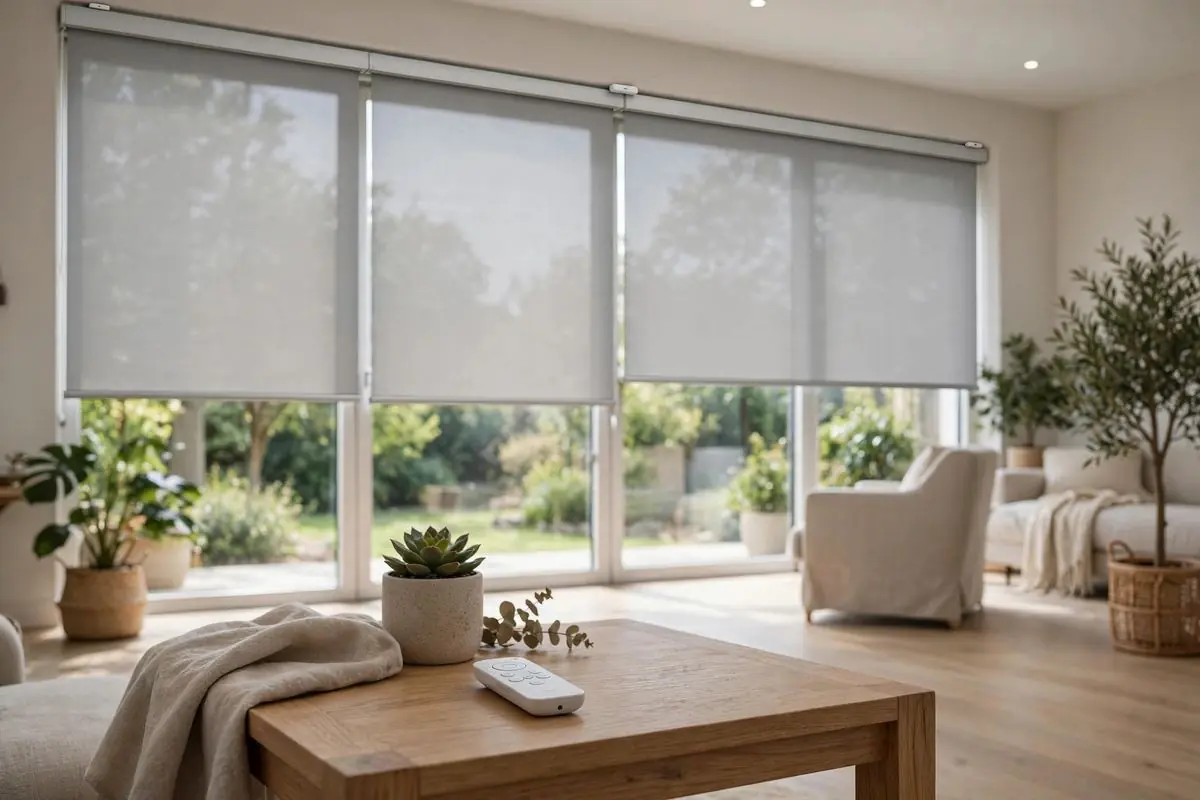
Motorized blinds are window coverings fitted with a small electric motor that opens and closes them at the press of a button, on a timer, or through a smart home system. The blind itself can be a roller blind, zebra blind, roman blind, or even a curtain track. The motor simply replaces the chain or cord with automated movement.
BPC Company supplies and installs motorized blind systems as part of our automation solutions in Islamabad and Swat, alongside our manual blind range. This guide explains how motorized blinds work, what control options exist, which blind types motorize well, and what affects the cost, so you can decide whether automation is right for your windows.
How Motorized Blinds Actually Work
At the core of every motorized blind is a tubular motor hidden inside the roller tube, or a compact motor unit attached to the blind mechanism. The motor connects to a power source and a control receiver. When you send a command, by remote, wall switch, app, or voice, the receiver tells the motor to turn, raising or lowering the blind.
There are two power options. Wired motors connect to your home’s electrical supply through concealed wiring, usually installed during construction or renovation. Battery-powered motors run on rechargeable lithium batteries that slot into the blind tube and typically need recharging every few months depending on use. Battery motors are ideal for retrofits where running new wiring would mean breaking walls.
The control options range from simple to fully integrated. A handheld remote is the most common starting point. Wall-mounted switches work like light switches for blinds. Smartphone apps let you control blinds from anywhere. And integration with smart home platforms allows schedules, scenes, and voice commands, such as blinds that close automatically at sunset or open gradually in the morning.
Which Blind Types Motorize Best
Not every blind type is equally suited to motorization. Here is how the common options compare.
Roller blinds are the most popular choice for motorization. The simple rolling mechanism pairs naturally with a tubular motor, the installation is straightforward, and the result is clean and reliable. Both blackout and sunscreen roller fabrics work well.
Zebra blinds (also called day-and-night blinds) motorize well and are a frequent choice for living rooms and offices. The alternating sheer and opaque bands need precise positioning to align correctly, which is something a motor does more consistently than a hand-pulled chain.
Roman blinds can be motorized, though the folding mechanism adds complexity. They suit bedrooms and formal spaces where the soft fabric look matters.
Venetian and wooden blinds are less common candidates. Tilting the slats can be motorized, but raising the full blind remains manual on most systems. If you want wooden blinds with automation, discuss the specific mechanism with your supplier before committing.
Curtain tracks deserve a mention. Motorized curtain tracks are a separate product but often specified alongside motorized blinds in the same project, particularly for large living room windows and media rooms.
If you are still choosing between blind types, our guide to window blinds and shading solutions covers the manual range in detail, including which fabrics suit which rooms.
Control Options: From Remote to Full Smart Home
The control layer is where you decide how much convenience you want.
Handheld remote. One remote can control a single blind or be programmed to operate several blinds individually or as a group. This is the standard option and suits most homes.
Wall switch. A fixed switch near the door or bed, useful in bedrooms and conference rooms where you want control without hunting for a remote.
Timer and scheduling. Many systems allow you to set daily schedules. Blinds open at 7 AM and close at sunset, automatically. This is popular for homes where residents are away during the day and want the house to look occupied, or for protecting furniture from afternoon sun.
Smartphone app. Control blinds from anywhere with an internet connection. Check whether you left the bedroom blinds open after leaving for the office, and close them remotely.
Voice and smart home integration. Systems compatible with common smart home platforms can respond to voice commands and participate in scenes. A “movie night” scene might dim the lights, close the blinds, and turn on the TV with one command.
Sun and wind sensors. For outdoor applications like terrace shades, sensors can trigger blinds or awnings automatically based on sunlight or wind conditions. This is more relevant to commercial projects and farmhouses.
You do not need to choose everything at once. Many clients start with remotes and add app control or scheduling later, since the motor hardware is the same.
Where Motorized Blinds Make the Most Sense
Tall or hard-to-reach windows. Stairwell windows, double-height living rooms, and skylights are the clearest use case. If you cannot comfortably reach the blind, motorization is not a luxury, it is the practical solution.
Bedrooms. Waking up to blinds that open gradually is genuinely pleasant, and closing blackout blinds from bed on a cold night needs no further justification.
Media rooms and home offices. Light control matters for screens. Being able to adjust blinds without leaving your chair during a video call is a small convenience that gets used daily.
Large glass walls. Villas and offices with floor-to-ceiling glazing often have multiple wide blinds. Operating five or six blinds individually by hand gets old quickly. Group control handles them all at once.
Elderly residents and accessibility. For anyone with limited mobility, motorized blinds remove a daily physical task.
Commercial spaces. Offices, clinics, and showrooms use scheduling to manage glare, privacy, and energy. A reception area whose blinds adjust automatically through the day looks consistently professional.
What Affects the Cost of Motorized Blinds
Motorized blinds cost more than their manual equivalents, and several factors determine by how much.
Number of blinds and group control. Each blind needs its own motor, but one remote or control point can operate multiple blinds. Motorizing eight windows costs more than motorizing two, though the per-blind control cost drops when they share a remote.
Power type. Battery motors avoid wiring costs and are cheaper to install in existing homes. Wired motors cost more to install but never need recharging. For new construction, wiring during the build phase is the cleaner option.
Control complexity. A basic remote setup costs less than app control with scheduling, which costs less than full smart home integration. Decide how much automation you will actually use.
Blind size and fabric. Larger blinds need stronger motors. Heavier fabrics, such as blackout with thermal backing, also require more powerful motors than light sunscreen fabrics. The blind itself is priced like any quality blind, based on size, fabric, and finish.
Integration work. Connecting blinds to an existing smart home system may need additional hubs or configuration. If you are planning a broader home automation setup, specifying blinds and other automated elements together is more efficient than adding them piecemeal.
BPC does not publish fixed rates because every project differs in window count, sizes, and control requirements. We quote after understanding your windows and how you want to control them.
Getting Motorized Blinds from BPC
Our process starts with a conversation about your windows and your expectations. We assess which blinds suit motorization, whether battery or wired power makes sense for your situation, and which control level fits your daily routine.
For Islamabad, Rawalpindi, and Jhelum, WhatsApp us at 03126175608. For Swat, Shangla, Dir, Buner, and Peshawar, reach us at 03339477778.
If you are automating more than just blinds, our automation solutions cover gate motors, rolling shutters, and integrated smart controls under one roof, so a single team handles the complete project.
FAQs
Are motorized blinds reliable in Pakistan’s power conditions? Battery-powered motors are unaffected by load shedding since they run on their own rechargeable cells. Wired motors connect to your home supply like any appliance. We recommend battery motors for most retrofit projects for exactly this reason.
How long does the battery last on a rechargeable motor? Battery life depends on blind size, fabric weight, and how often you operate the blind. As a rough guide, a bedroom blind used twice daily typically runs for several months between charges. Recharging is done with a standard charger, and the battery slides out without tools.
Can I motorize blinds I already have? In most cases, no. The motor is built into the blind’s roller tube during manufacturing, so existing manual blinds generally need to be replaced with motorized units. The good news is that the brackets and measurements are usually similar, so replacement is straightforward.
Do motorized blinds work during a power outage? Battery motors work normally. Wired motors stop until power returns, though most have a manual override option. If outages are frequent in your area, battery motors are the safer choice.
Can one remote control multiple blinds? Yes. Multi-channel remotes let you operate blinds individually or in groups. You might group all bedroom blinds on one channel and living room blinds on another, plus an “all” channel that moves everything at once.
Are motorized blinds noisy? Quality tubular motors produce a low hum during operation, noticeable in a quiet room but not disruptive. Cheaper motors tend to be louder, which is one reason motor quality matters.
What happens if the motor fails? Motors from reputable manufacturers are built for thousands of cycles. If a motor does fail, it can be replaced without replacing the blind fabric. This is why BPC specifies motors from established suppliers with available spare parts.
Can motorized blinds be integrated with Alexa or Google Home? Many of our motor systems support integration with common smart home platforms through a hub or bridge device. Confirm compatibility with your specific platform before ordering, as it varies by motor model.
You May Also Like


Still have questions?
Chat with our team on WhatsApp for a free site visit and written quotation. We reply within minutes during working hours.