
The Damp Wall Problem (and the Honest Order of Operations)
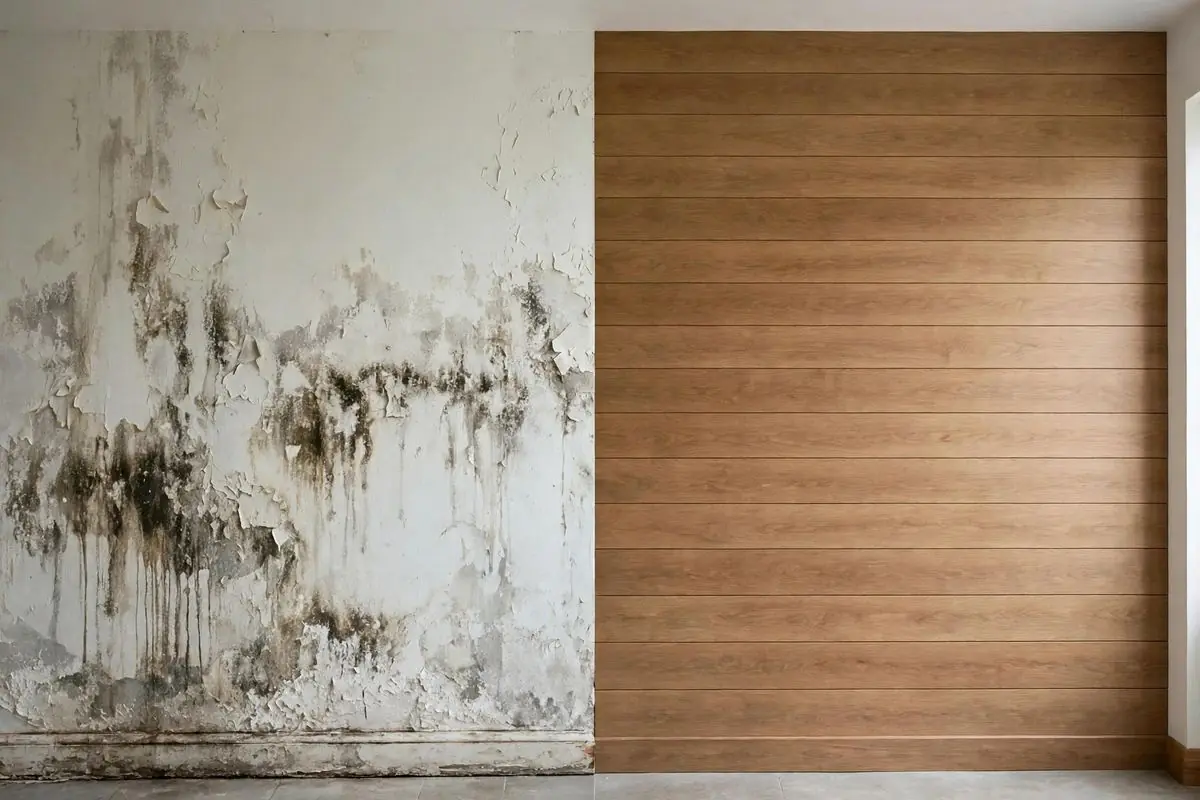
Damp walls are one of the most common and most mishandled problems in Pakistani homes. Seepage stains spread across bedroom walls. Paint bubbles and flakes off. Plaster crumbles. A musty smell settles into the room. And the standard response, painting over the damage, fails within months because the moisture is still there, pushing through from behind.
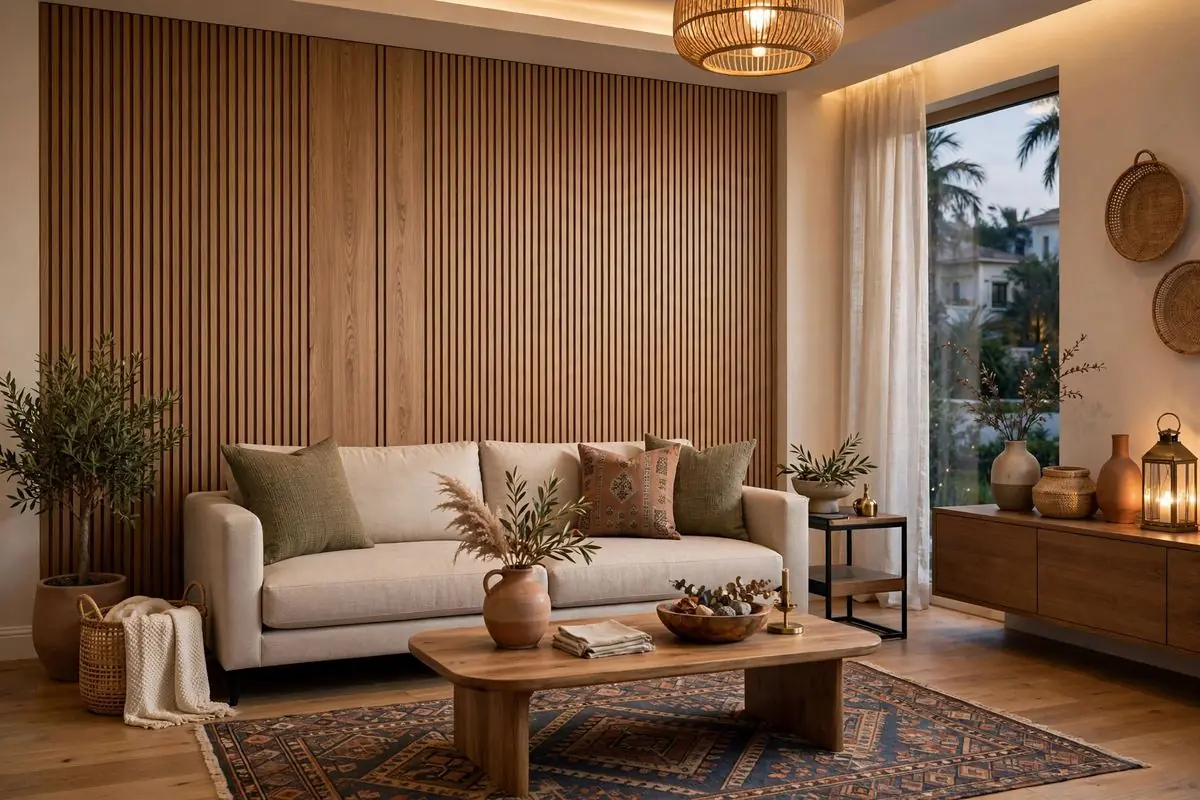
WPC (wood-plastic composite) wall panels offer an excellent way to finish a seepage-damaged wall beautifully. But here is the honest truth that many panel sellers will not tell you: panels cover the damage; they do not fix the leak. If active seepage continues behind the panels, moisture will eventually find its way around or through, and you will have an expensive problem hidden behind an attractive surface.
The correct order is always: treat the leak first, then finish the wall. This guide explains both steps honestly. BPC Company provides Greenseal waterproofing services to stop leaks at the source, and WPC wall panel installation to finish damaged walls, from our Islamabad branch (Plaza 54, MB Commercial, DHA Phase 2) and our Swat branch (near 3 Friends CNG Pump, G.T. Road, Qamber, Mingora).
Why Walls Get Damp in Pakistan
Understanding the cause determines the fix. Common sources of wall dampness:
Roof leakage above. The most common cause. Water enters through a failed roof, travels down through the wall, and appears as damp patches on interior walls, often at the top of the wall first.
External wall seepage. Rain driven against exterior walls penetrates through cracks, porous plaster, or failed exterior paint. Common on walls facing the prevailing monsoon direction.
Plumbing leaks. Hidden pipe leaks inside walls cause localized damp patches that grow over time. These often appear as concentrated wet spots rather than broad staining.
Rising damp. Ground moisture wicks up through walls lacking a proper damp-proof course, typically affecting the lower portion of ground-floor walls.
Bathroom seepage. Water from an adjacent bathroom migrates through shared walls, especially where bathroom waterproofing has failed.
Condensation. In poorly ventilated rooms, indoor moisture condenses on cold walls. This is a ventilation problem, not a leak, but it causes similar surface damage.
Each cause needs a different fix. Panels are the finishing step for all of them, but the underlying treatment differs.
Step 1: Treat the Leak (Non-Negotiable)
Before any panel goes up, the moisture source must be addressed:
- Roof leaks: Professional waterproofing with a proper system (BPC uses Greenseal technology). See our roof waterproofing guide for details.
- External seepage: Exterior wall treatment, crack repair, and waterproof exterior coating.
- Plumbing leaks: Locate and repair the pipe. No panel or paint will fix an active pipe leak.
- Rising damp: Damp-proof course treatment.
- Bathroom seepage: Bathroom waterproofing to stop migration through shared walls.
- Condensation: Improve ventilation. Panels alone will trap moisture and make it worse.
A reputable contractor will insist on this order. If a panel seller is happy to install over an actively leaking wall without mentioning treatment, that tells you everything about their priorities.
BPC’s approach: we inspect the wall, identify the moisture source, treat it with the appropriate Greenseal waterproofing system, allow proper drying time, and only then install panels. It takes longer. It also actually works.
Step 2: Why WPC Panels Are Ideal for Seepage-Damaged Walls
Once the leak is treated and the wall is dry, WPC panels are an excellent finishing choice for several reasons:
They do not absorb moisture. Unlike paint, wallpaper, or gypsum, WPC panels are moisture-resistant. If minor residual dampness exists, panels tolerate it far better than conventional finishes.
They cover damaged surfaces. Seepage often leaves walls pitted, stained, and uneven. Panels mount on a frame or directly to the wall, creating a clean, flat surface regardless of what is underneath.
They look premium. WPC panels come in woodgrain, marble, and contemporary designs that transform a damaged wall into a feature wall. What was an embarrassment becomes a design highlight.
They are durable. Quality WPC panels resist scratching, are easy to wipe clean, and do not need repainting. In a room that had moisture problems, this durability matters.
They install quickly. Compared to replastering, curing, and repainting (which takes weeks), panel installation is fast and clean.
For the full range of wall finish options, see our wallpapers and wall paneling page.
WPC Panels vs Other Options for Damp Walls
WPC panels vs repainting. Repainting is cheaper upfront but fails quickly if any moisture remains. Even on a properly treated wall, paint over previously damp plaster may not bond well. Panels are the more reliable long-term finish.
WPC panels vs PVC panels. Both are moisture-resistant. WPC generally offers a more premium look and feel, with better rigidity. PVC panels are typically more budget-friendly.
WPC panels vs tiles. Tiles are fully waterproof and work well in bathrooms, but they look institutional in living spaces. WPC panels offer a warmer, more residential aesthetic for bedrooms and living rooms.
WPC panels vs wallpaper. Never put wallpaper on a wall with any dampness history. Wallpaper traps moisture, peels, and grows mold. Panels are the correct choice for previously damp walls.
What Affects the Cost
BPC does not publish fixed rates. Cost factors for seepage wall treatment plus paneling:
Leak treatment scope. The waterproofing work (roof treatment, exterior sealing, etc.) is a separate cost from the paneling. Its scope depends on the leak source and severity.
Wall area. Larger walls need more panels and more labor.
Panel design and quality. Premium woodgrain and marble-finish panels cost more than basic designs. Thicker, more rigid panels cost more than thin ones.
Wall condition. Severely damaged walls may need more preparation (loose plaster removal, leveling) before panels can be mounted.
Room access and location. As with all our work, site conditions affect labor.
The honest total is treatment plus panels. Any quote that seems too cheap is probably skipping the treatment step.
Red Flags
“No need to fix the leak, panels will cover it.” This is the biggest red flag. Panels over an active leak will trap moisture, potentially causing hidden mold and structural damage.
No inspection of the moisture source. A contractor who does not ask where the water is coming from is not solving your problem.
Suspiciously low pricing. Proper treatment plus quality panels has a real cost. Dramatically low quotes mean corners are being cut somewhere.
BPC’s Two-Step Process
1. Inspect and diagnose. We visit, identify the moisture source, and explain what treatment is needed. 2. Treat the leak. Greenseal waterproofing applied to the source (roof, exterior wall, bathroom, etc.). 3. Allow drying. The wall needs time to dry fully after treatment. Rushing this step compromises the finish. 4. Install panels. WPC panels mounted to create a beautiful, durable finish. 5. After-sales support. If any issues arise, we return.
For Islamabad, Rawalpindi, and Jhelum: WhatsApp 03126175608. For Swat, Shangla, Dir, Buner, and Peshawar: WhatsApp 033394777778.
FAQs
Can WPC panels be installed on a damp wall? Panels should only be installed after the moisture source is treated and the wall is dry. Installing over active seepage traps moisture and causes bigger problems. BPC always treats the leak first.
Do WPC panels stop seepage? No. Panels are a finish, not a waterproofing system. They cover and protect the wall surface, but the leak must be stopped at its source with proper waterproofing.
How long after waterproofing can panels be installed? The wall must be fully dry. Drying time depends on the severity of the previous dampness, ventilation, and weather. Our team assesses dryness before proceeding.
Are WPC panels better than paint for seepage walls? Yes, significantly. Paint fails quickly on walls with any moisture history. WPC panels are moisture-resistant, cover surface damage, and last far longer.
Can panels be removed later if needed? Yes, WPC panels can be removed if wall access is needed later. Discuss this with our team during your site visit so the installation method suits your situation.
Do you handle both the waterproofing and the paneling? Yes. BPC provides Greenseal waterproofing to treat the leak and WPC panel installation to finish the wall. One contractor, one accountable team.
What if the seepage comes back after paneling? This is why we treat the source properly first. If a new, unrelated leak develops, panels can typically be partially removed for access and reinstalled.
You May Also Like

Still have questions?
Chat with our team on WhatsApp for a free site visit and written quotation. We reply within minutes during working hours.